culinary flights of fancy

Home Cooking Adventures in Berkeley Heights


1 Comment

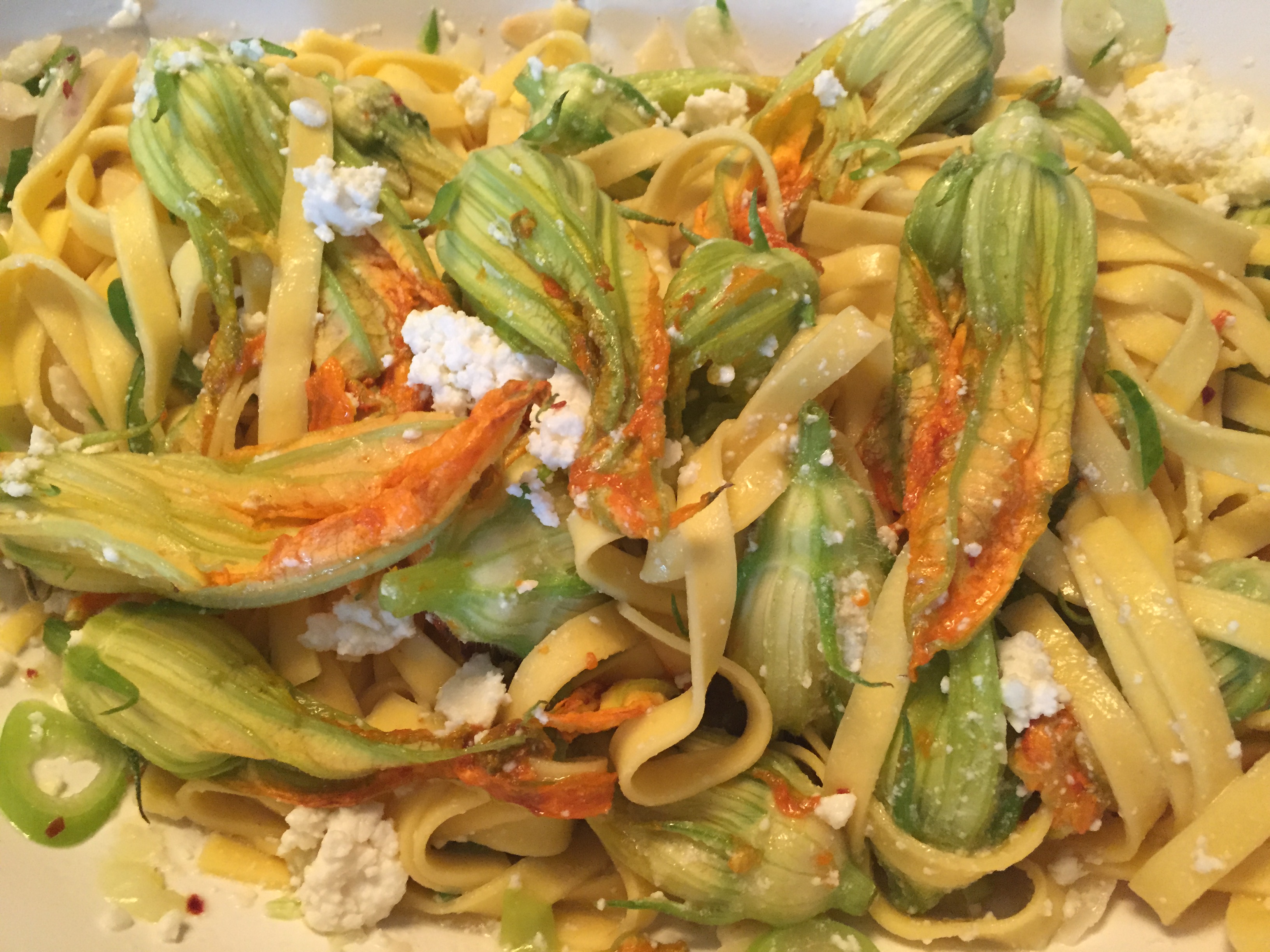
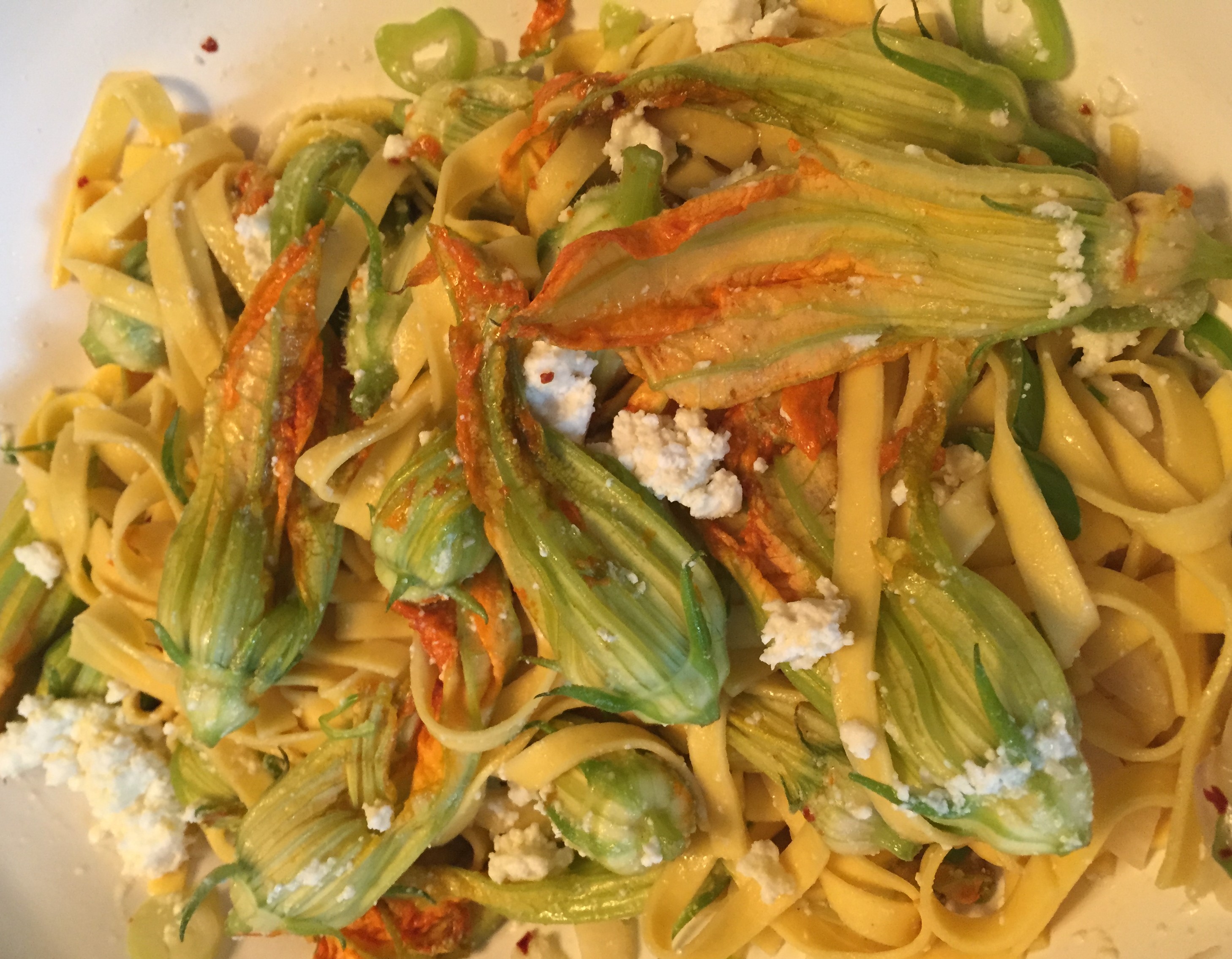
Tagliatelle Pasta with Squash Blossom, Spring Onion, and Ricotta

Delicate squash blossoms are tossed in raw at the very end allowing the residual heat from the cooked pasta to lightly wilt them.

Delicate squash blossoms are tossed in raw at the very end allowing the residual heat from the cooked pasta to lightly wilt them.

Gently toss the squash blossoms into the pasta as they will tear and break very easily.

Gently toss the squash blossoms into the pasta as they will tear and break very easily.

It’s been a while…I hope you are well.  I’m kicking things off with this very summery pasta dish that happens to be both beautiful and simple to make.  It’s pretty delicious as well!  Stay tuned as there’s lots more ahead…I’ve been cooking a lot and am way behind on writing the recipes up for publishing.  I hope to correct that very soon with a slew of new things to keep you busy!  I apologize for the delay.

Squash blossoms are available in markets and farmer’s markets but you have to look for them.  If you go to a farmer’s market, you will likely have to arrive early to find them as they usually go quickly.  As implied by the name, they are simply blossoms found on the plants of summer squash.  They have a delicate squash flavor and are really beautiful.  Unfortunately, as they are delicate, they have a tendency to go bad rather quickly so it’s best to use them the same day you buy them.  Since they do have a more subtle flavor they can take on various flavors rather quickly and can easily be overpowered.  Traditionally, they are often served stuffed with ricotta and delicate, lightly flavored herbs such as parsley and chives.  Sometimes they are steamed or flash sautéed with just a touch of olive oil.  Another very popular thing to do is stuff them as above but then lightly bread them and serve them fried.  I love stuffed squash blossoms but sometimes they are small and since they are delicate, they can fall apart rather easily while attempting to stuff them.  So this is a great recipe to use if you find yourself with small blossoms.  Further, if you are like me, and you just want to make it easy on yourself sometimes, skip stuffing them and simply toss them in some pasta with the same flavor profiles used when stuffing.  This is a fast and easy pasta dish that is great either for a weekday meal or for a more special occasion because no matter how you serve them, they really are striking in their presentation.  Recipe follows after the jump… Continue reading


Leave a comment

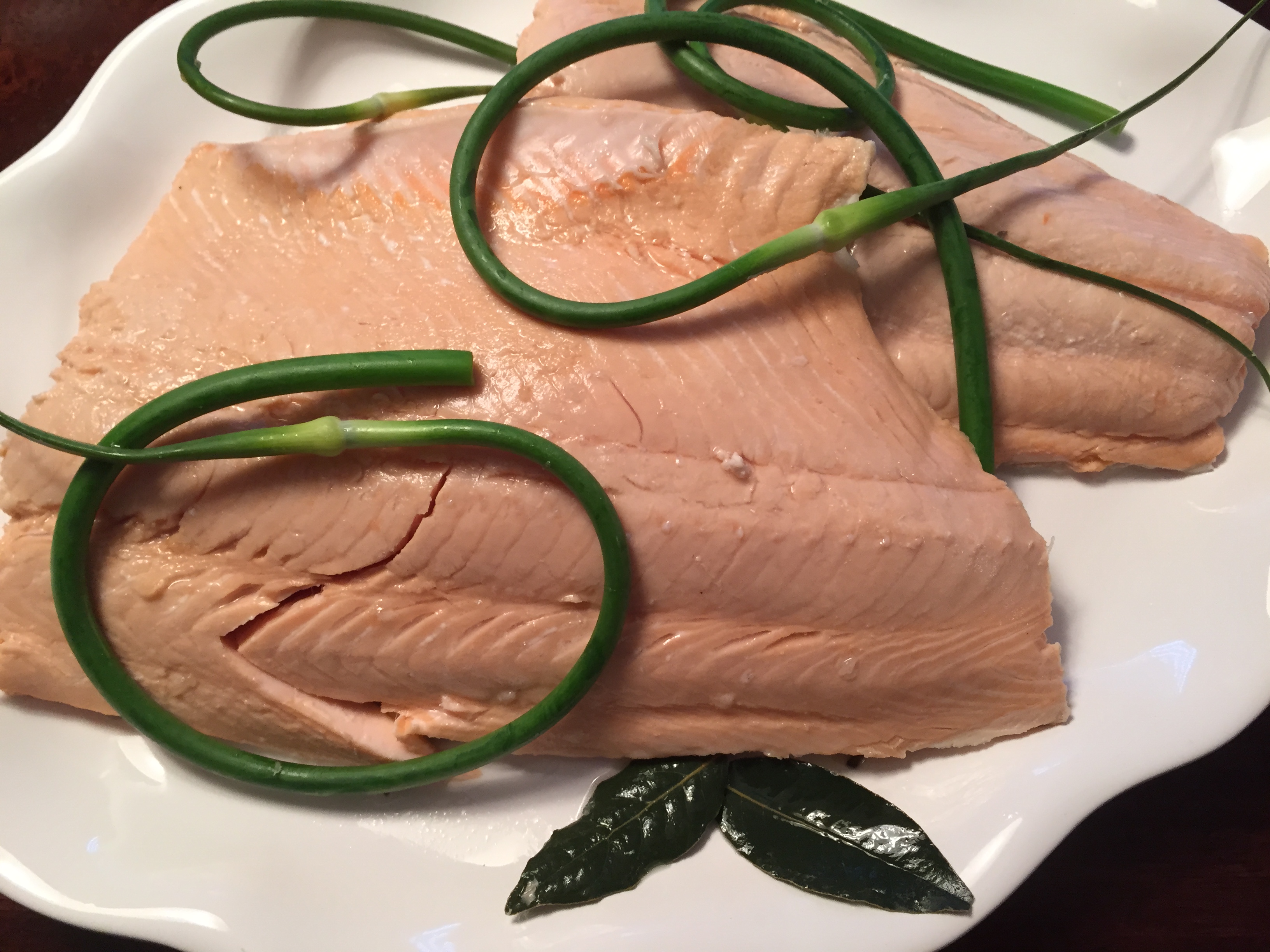
Wild Caught Alaskan Salmon Poached In Vinho Verde with Garlic Scapes

A good piece of fish should really be celebrated by using simple seasoning and cooking methods so that the beauty of the fish shines through!

A good piece of fish should really be celebrated by using simple seasoning and cooking methods so that the beauty of the fish shines through!

Salmon.Poached.2

Wild Alaskan Salmon Poached In Vinho Verde with Garlic Scapes:

When you have a beautiful piece of fish, you really don’t need to do a whole lot to it.  Rather, restraint is really the rule of the day so that the subtle flavors really shine.  As such, poaching is a great way to cook a special piece of fish.  There’s no browning, crisping the skin, etc.  It’s just a very simple and fairly quick way to prepare the fish, imparting slight flavors from the poaching liquid but really still keeping things simple.  Here, I chose to poach the salmon in a Vinho Verde and I chose it for a couple of reasons.  First, this type of Portuguese wine is relatively inexpensive, which makes it a great choice to use as a cooking wine.  Secondly, it is a young wine that doesn’t have too much complexity in terms of taste.  It just has a nice straight forward taste that has nice acidity.  It’s easy to drink and, when cooking it adds just enough flavor to a dish without completely overpowering the dish.

Garlic scapes, also called garlic shoots, are pretty great.  They look interesting in that they are bright green and have a curly shape.  They possess a garlic flavor that I think is slightly less dramatic than regular garlic cloves.  Scapes can be found right around this time and for a few more weeks moving forward at farmer’s markets and certain specialty stores.  Here, I kept them whole but you can chop them up as finely or as coarsely as you like and you use them just as you would a regular clove of garlic.  Since they are only available for a few weeks, if you find them, I’d suggest stocking up…they freeze pretty well!  Recipe follows after the jump… Continue reading


1 Comment

Porchetta

IMG_0051 (2)


IMG_0052 (2)p


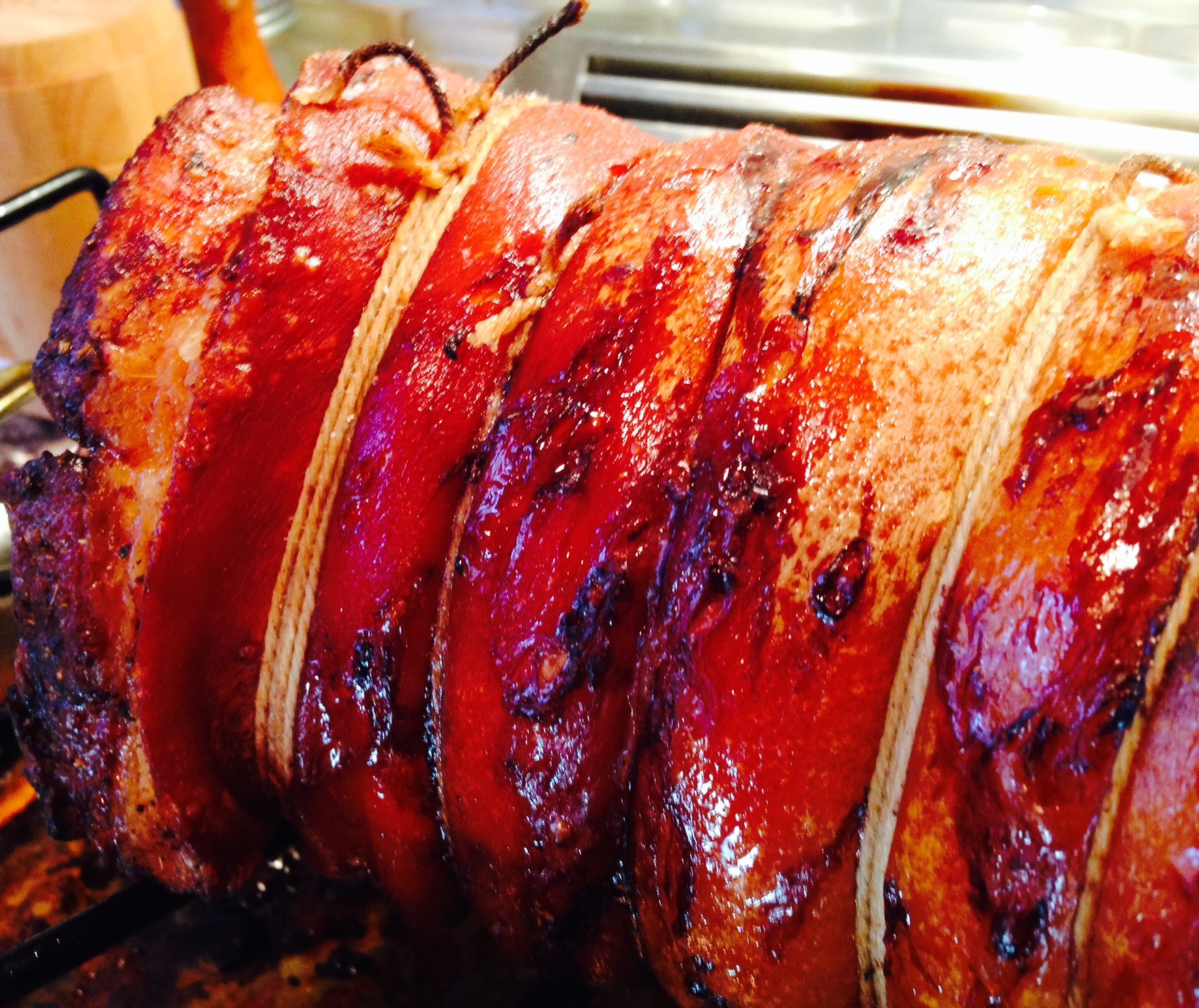
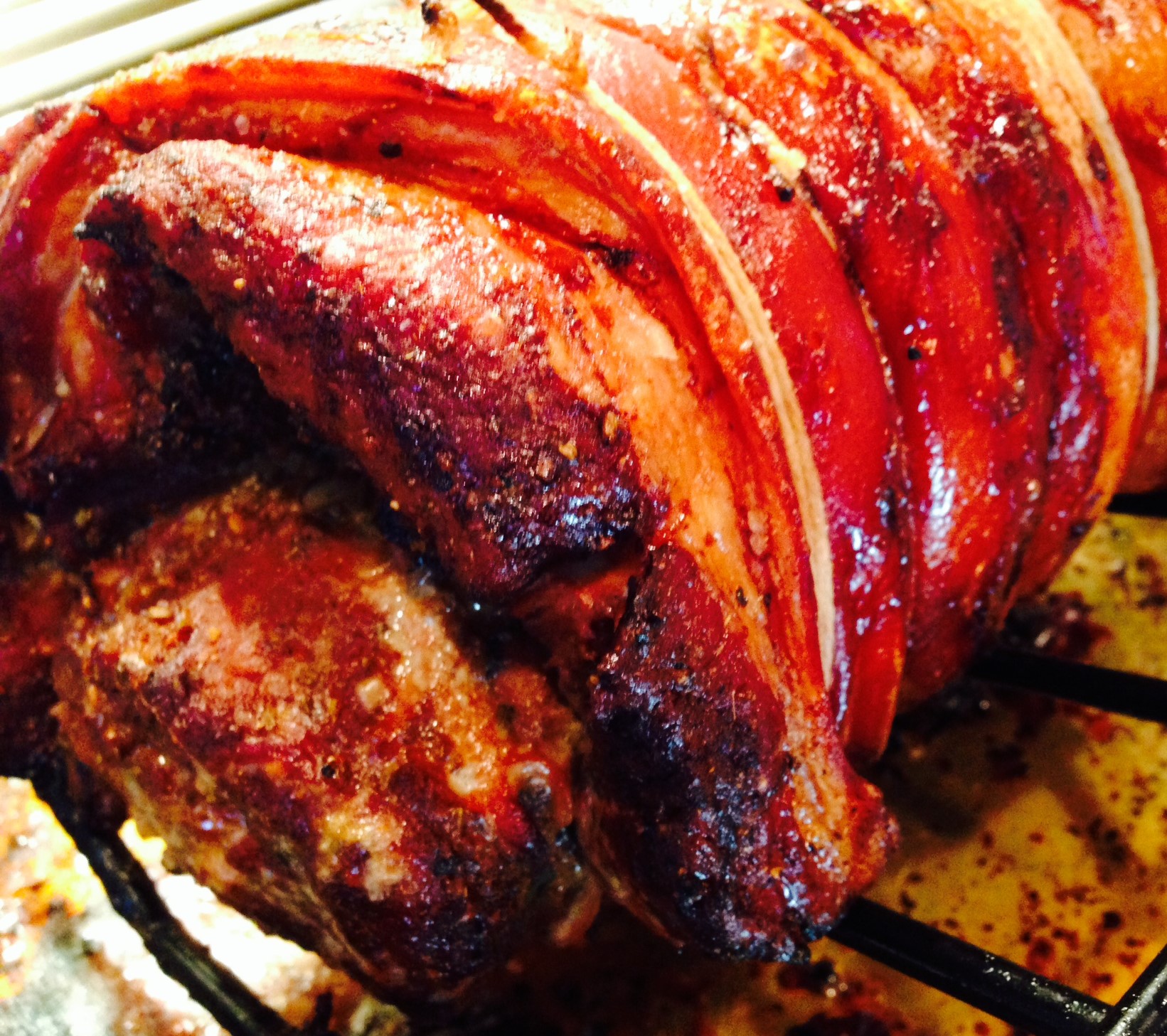
Sorry for the time in between posts…it’s been a busy couple of weeks with birthdays, a trip to Illinois for a class reunion, catching a bad cold, etc.  With all of that in the rear view at this point, I can safely say that I will get back into the swing of things!  Porchetta is a rolled Italian pork roast that combines both the pork loin and the pork belly.  It’s super delicious with a moist, spicy interior that is surrounded by the crispy skin of the belly.  Tomorrow I will post another Italian dish…tomato sauce with Italian sausage and broccoli rabe.  Ok, so this one is a special occasion sort of main course that takes a couple days.  However, despite the time it takes, it’s actually pretty straight forward.  I purchased both the pork loin and the pork belly from John’s Italian meat market.  I happen to have butcher’s twine so I didn’t need any.  However, if you need some, just let the butcher know what you are making and he or she will certainly give you some to tie everything together.  I used a recipe (which can be found here) and modified it a bit to suit my taste.  I omitted the orange rind/slices and added more garlic and red pepper flakes.  I also added more salt (probably a couple tablespoons more).

I followed the roasting directions exactly except that I took mine out about 30 minutes prior to when they suggested as mine was looking done.  As it turned out, that was a good call as it was definitely done and probably would have tasted overdone had I let it continue.  Definitely allow the porchetta to rest for at least thirty minutes…an hour would probably be better.

I served the porchetta at room temperature along with some blanched vegetables as this is a rich, heavy dish.  I didn’t serve it with a sauce but a stock and wine reduction would certainly work if you’d like.


IMG_0053 (2)


6 Comments

Easter Celebration Menu: Fresh ham with Provencal Herbs and basted in French wine

Image

Try this for your Easter celebration on Sunday.  It’s very easy, feeds a crowd, and is unbelievably good.  I used a red wine here but a good French wine will work just as well.  I plan to make a Swiss chard gratin, salad, bread, and some other sort of vegetable dish to be determined.  I haven’t sorted out dessert yet either but will post the full menu once I figure it out.  Until then, check this recipe out and give it a try!  PS- this is a recipe from last summer.  I’m reposting it because this is the dish we landed on for Easter this year…my Italian Easter Pie idea was nixed (boo!).

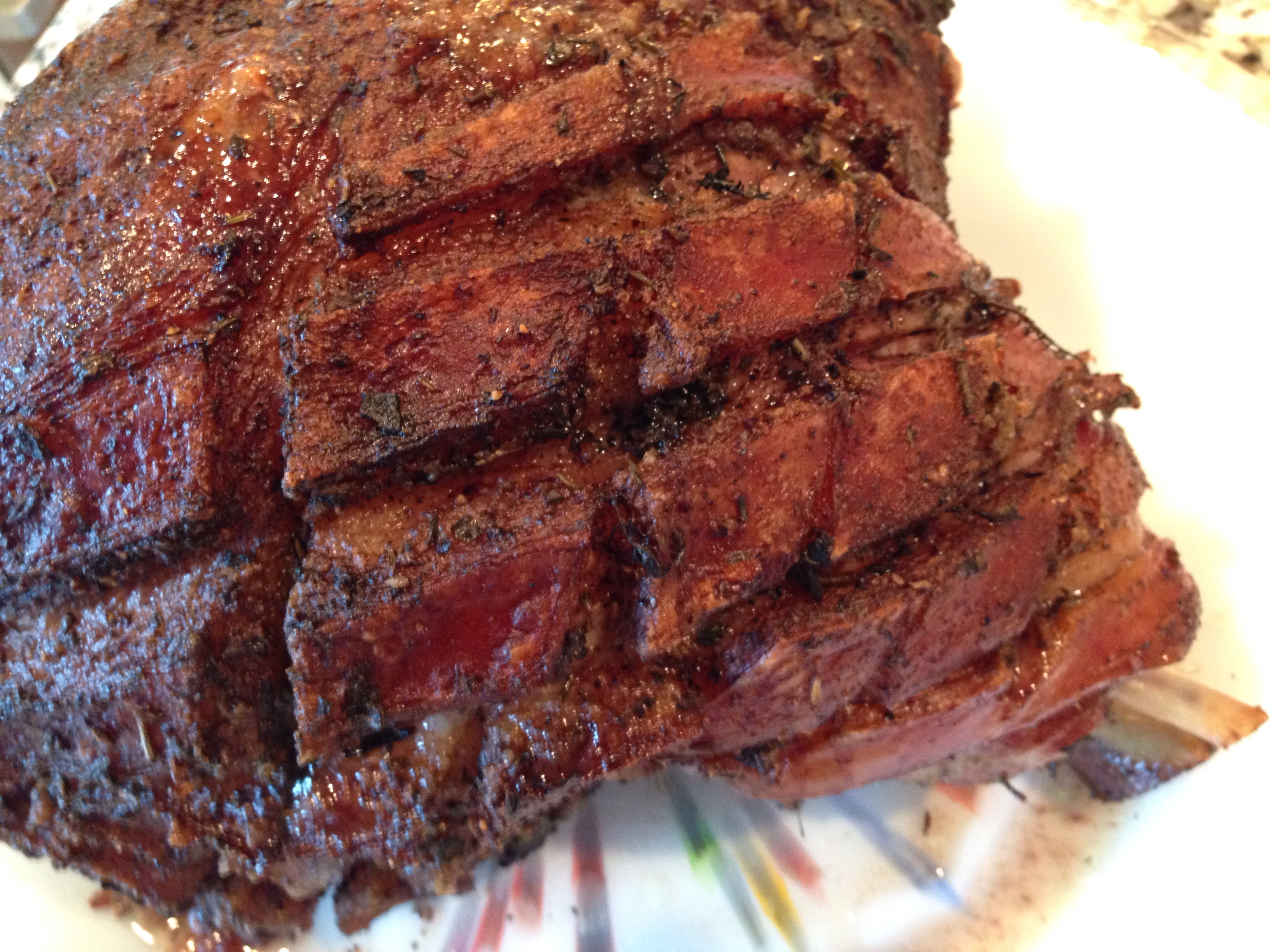
I don’t have a lot of experience with fresh ham. This is actually only the second time I’ve cooked one, though it’s such a massive piece of meat, you can adapt all sorts of recipes for leftovers after your initial meal. For me, there are a few advantages of cooking a fresh ham. First, and foremost, you get a lot of bang for your buck. It’s a great value and it’s sort of a showstopper for a dinner party because it doesn’t really look like a ham and if well roasted, it looks great and tastes really good too! In fact, if you have never had a fresh ham, it really tastes more like a pork loin roast than a typical ham. That difference in taste stems from the fact that it’s fresh or raw. In other words, most hams in grocery stores are usually cured for a number of days in a salt, sugar, spice and who knows what else mixture then slowly smoked. The fresh ham has not had anything done to it so the pork flavor takes center stage. Another really great thing about a fresh ham is that you can ask for the skin to remain on, thus giving you a crispy, browned outer crust. Underneath the crust you get a nice layer of fat that keeps the meat moist and succulent. Basted with French white or red wine, it takes on a nice natural sweetness and acidity as well.

The first time I made a fresh ham it was for a large dinner party for my wife’s co-workers and I made a 20 pound ham. It was huge, barely fitting in our oven. However it did and it worked out great. It easily fed the dinner party and we had lots of leftovers for sandwiches, etc. I actually made homemade Cuban sandwiches with some of the leftovers, complete with homemade Cuban loaves of bread and homemade yellow mustard. It was pretty great. Another little nerdy chef-y benefit to the fresh ham is that I get a fairly large leg bone (yep, the ham is a portion of the leg) that I can make stock out of. Last time I had one, I made a really great combination stock with the pork leg bone, the bones of one chicken, some beef bones with marrow still intact, and rounded out with a bunch of aromatic vegetables and herbs. I use this stock all the time…it made a ton and it’s super tasty. It imparts a great flavor to sauces, braises, stews, etc. Who knows what sort of stock I’m make with this leg bone, but I certainly will make some sort of stock with it!

This time, however, I chose to make a fresh ham as we are having a few relatives over for a number of days and wanted something that we could quickly pull out for dinner, have for lunch, or use for breakfast. I went with a 13 pound ham this time but will cook it in the same manner…rubbed with homemade dried herbs and sea salt, roasted slowly, and basting in a red French wine flavored with thyme, fresh bay leaves, and other aromatics. Luckily it won’t take four to five hours like the 20 pounder did!

I purchased both hams from Barth’s Meat Market in New Providence. They are definitely my go to butcher shop. I made pate the other day and needed ground pork liver…they procured it for me and ground in their grinder despite the fact that they definitely had to disassemble and clean every piece of the machine once it was finished. They did all of that for one customer and I only needed half a pound of the stuff. Talk about a business going above and beyond for a picky but very grateful customer! Anyhow, Barth’s makes their own regular, traditionally smoked hams that they have available all the time. As such, they usually have a fresh ham or two around because they prepare their smoked, cured hams from scratch. Luckily for anyone looking for a fresh ham, then, you don’t really need to even special order this special occasion cut of meat.

As for serving the dish, I plan to put it out on a platter and have it handy anytime for any meal. It’s so versatile that it really could be served for breakfast, lunch, or dinner. I will probably make a croque madame with it at some point. Can’t beat that! However, I made a homemade tartar sauce that goes great with it. Tartar sauce obviously goes wonderfully with fish but isn’t a ‘fish’ sauce alone. It’s a flavored mayonnaise seasoned with parsley, pickles, shallots, garlic, lemon juice, capers, and Dijon mustard (all of which go great with ham). Anyway, a bit of ham and some tartar sauce coupled with some summer vegetables or a salad will work great!

The recipe for the ham follows after the jump but keep in mind, you can spice it anyway you’d like and you can certainly cure it or brine it yourself prior to roasting it. I haven’t done either of those things yet…perhaps one day. For now, I’m going to enjoy a great slow roasted piece of pork seasoned with traditional French herbs and wine. Hope you try a fresh ham and enjoy it as much as Tara and I have.

Note: I used red French wine this time around. The first time I made a fresh ham, I basted it in a French white. After having now tried both, I definitely prefer the look and taste of the white wine baste. The red tastes just fine and certainly gave the ham a deep red brown hue, which I think looks great. The taste of the red wine is more forward, giving it a sticky, almost jam like feature to the outside crust. So all in all, not so bad. However, if I had to choose again in future, I would definitely go with white wine.

Recipe follows after the jump! Continue reading