culinary flights of fancy

Home Cooking Adventures in Berkeley Heights


Leave a comment

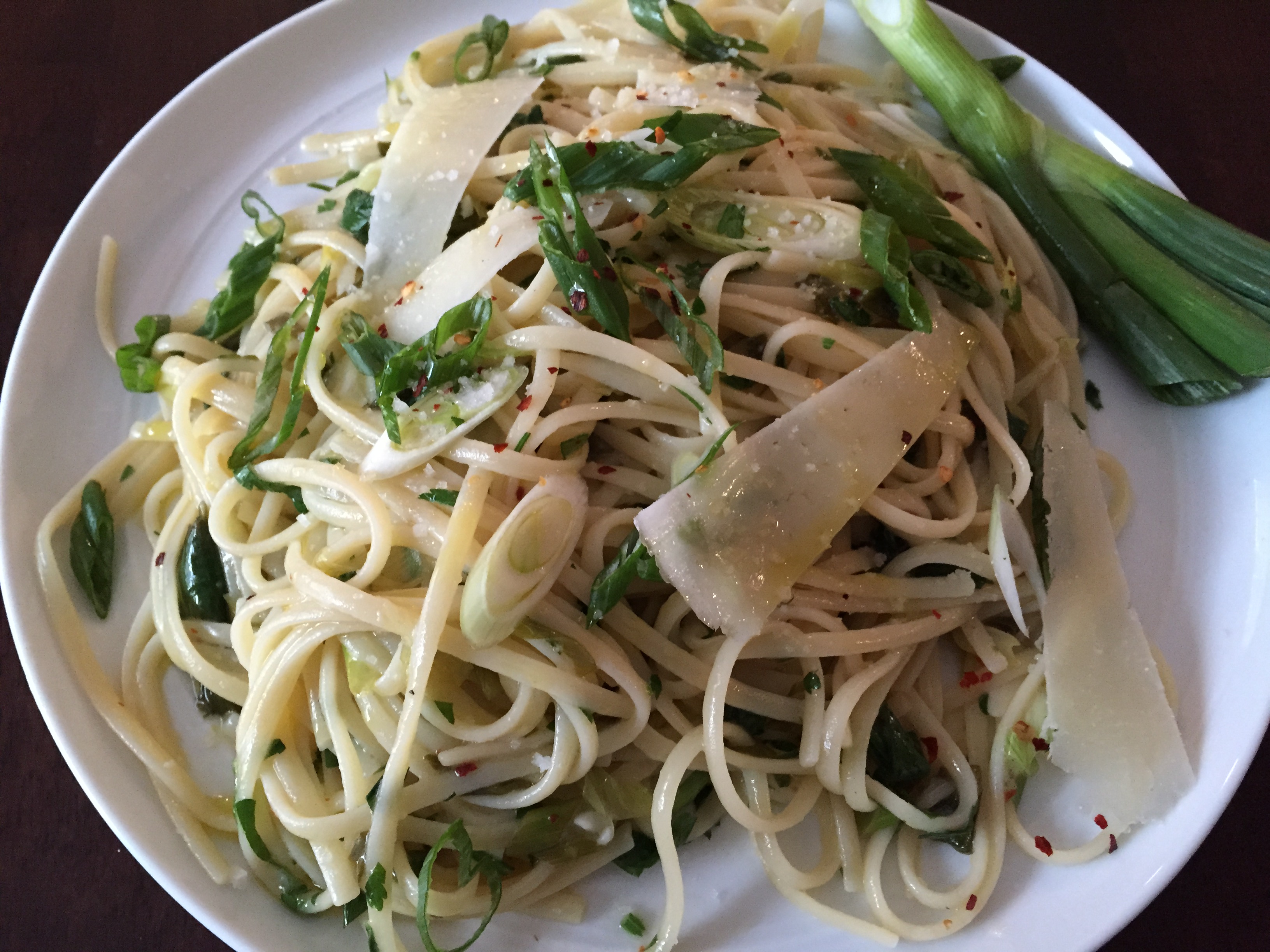
Linguini with Green Onions, Lemon, and Pecorino Cheese

Green onions take center stage in this simple pasta dish that celebrates the bounty of spring.

Green onions take center stage in this simple pasta dish that celebrates the bounty of spring.

We don’t eat a whole lot of pasta at our house.  It’s not that we don’t care for it or anything.  In fact, I really like it.  I think my wife is probably a little more ambivalent about it than me but she still likes it fairly well too.  However, the fact remains, we just don’t eat it that often.  I’ve posted a few pasta recipes here and there over the past year but I often feel sort of guilty about it as pasta is really so common, is it really necessary to give yet another pasta recipe?  I don’t know…I go back and forth but here we are discussing a new pasta recipe.  The great thing about pasta is that there are so many approaches and the flavor profiles of individual dishes can range from very complex with lots of ingredients to very simple with just a few.  This dish definitely falls into the latter category and really has just a few ingredients.  I chose linguini because that’s what we had at home, so feel free to adapt and change the type of pasta to suit your tastes and what you have on hand.  I do think that the general linguini, spaghetti, angel hair pasta shape works well with this dish.  I used very large green onions.  In fact, they almost bordered more on the spring onion size.  If you can find spring onions, definitely use those!  However, if you can’t, try to find the largest green onions/scallions that you can for this recipe.  Recipe follows after the jump… Continue reading


1 Comment

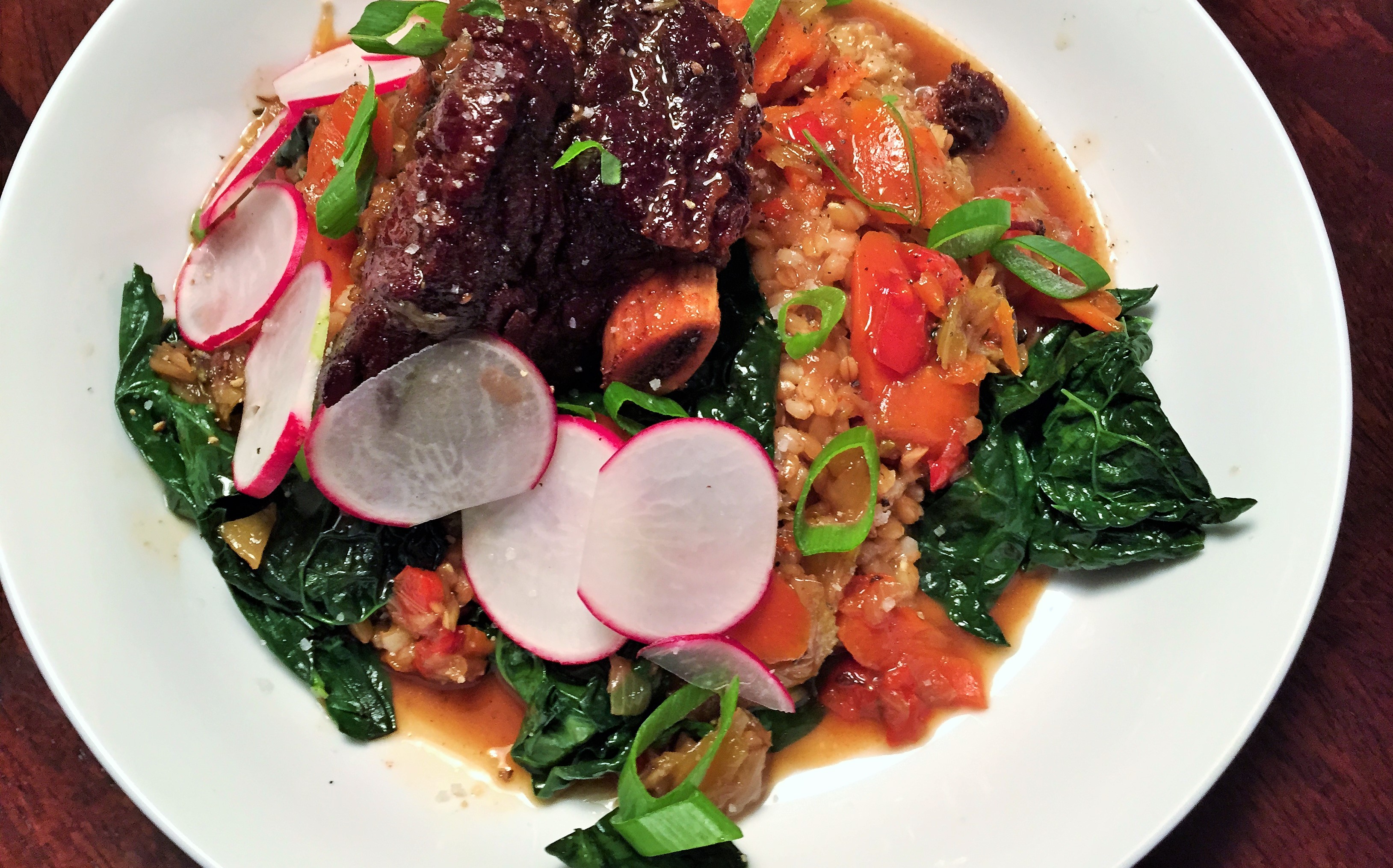
Lavender, Honey, and Sherry Braised Short Ribs

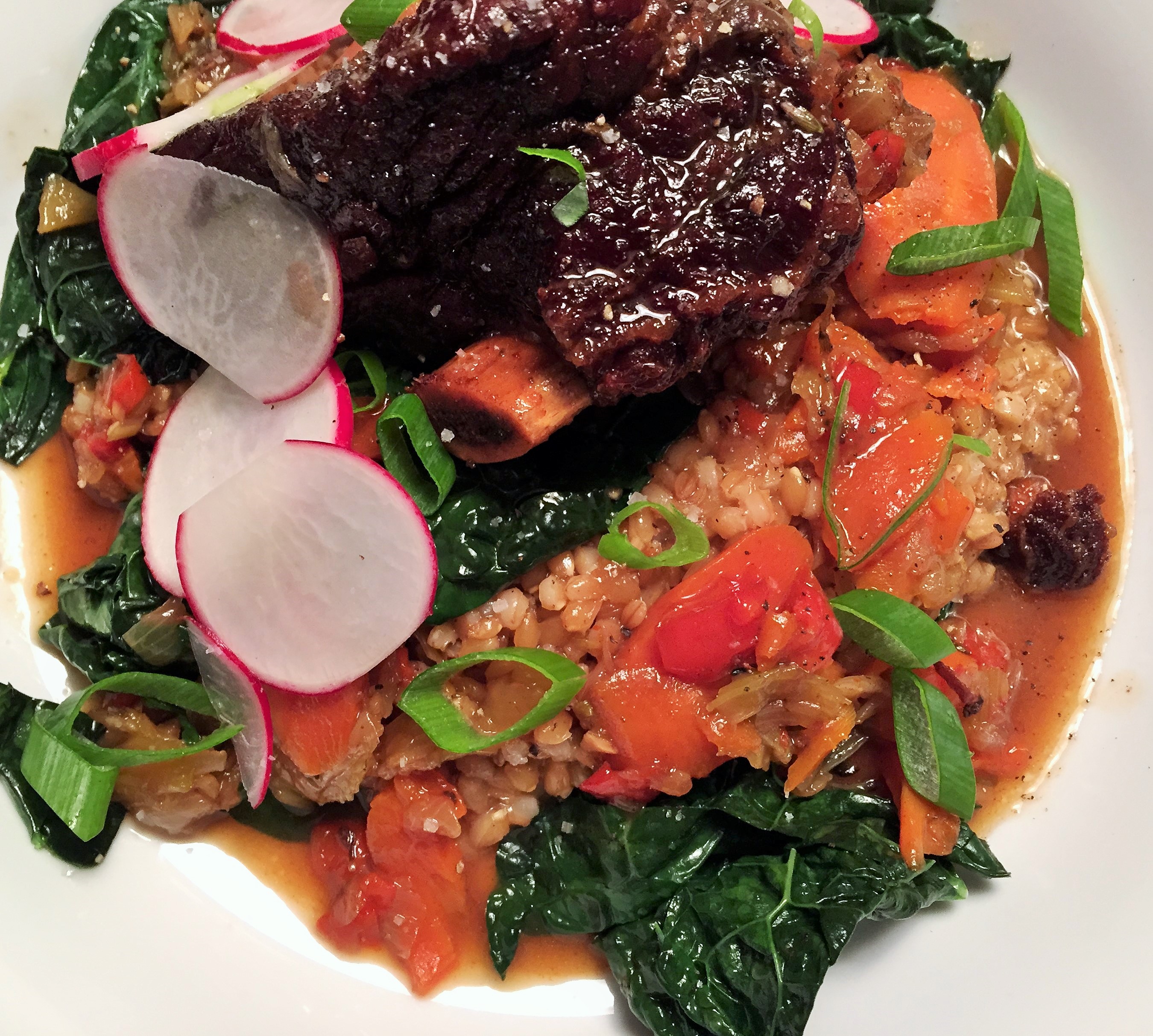
Lavender, honey, and sherry short ribs with risotto style farro and wilted greens.

Lavender, honey, and sherry short ribs with risotto style farro and wilted greens.

Raw thinly sliced radishes and spring onions add an earthiness and slight spiciness to the sweetness of the lavender honey sherry reduction.  Balance the whole dish with a very small drizzle of sherry vinegar.

Raw thinly sliced radishes and spring onions add an earthiness and slight spiciness to the sweetness of the lavender honey sherry reduction. Balance the whole dish with a very small drizzle of sherry vinegar.

This is another seasonal transition dish that marries hearty braised short ribs with some liter, more spring-like flavors.  I paired the short ribs with risotto style farro, wilted greens, and the braising vegetables and garnished it with thinly sliced radishes and spring onions.  This dish would be great with any rice or grain.  You can also skip it completely and serve it simply with vegetables and maybe some crusty bread to soak up the beautiful sherry and veal stock reduction that’s scented with lavender and honey.  Here I used a sweet sherry and, coupled with the honey, was almost too sweet.  So, if you prefer your main meals more on the savory side of the spectrum, simply use a dry sherry instead.  It will be great either way.  However, if you do use a sweet sherry, the extra sweetness added a nice balance to the earthiness of the farro, greens, radishes, and onions.  If you don’t have sherry, feel free to use a good quality white wine…it will turn out just as great.  Recipe follows after the jump… Continue reading


Leave a comment

Corned Beef Hash with Mixed Vegetables

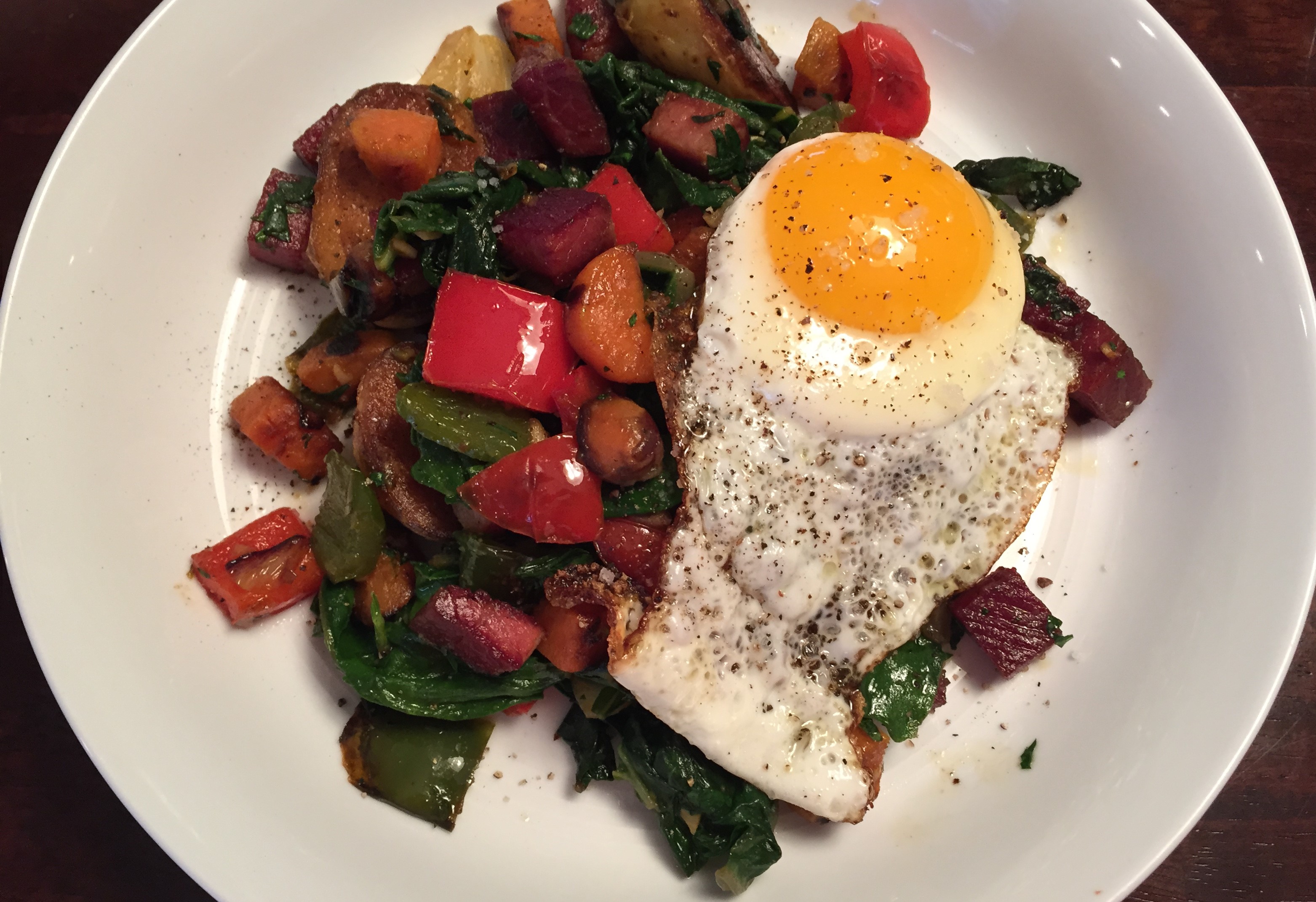
Lighten up a traditional corned beef hash by added greens, different types of potatoes, herbs, and other vegetables.

Lighten up a traditional corned beef hash by adding greens, different types of potatoes, herbs, and other vegetables.

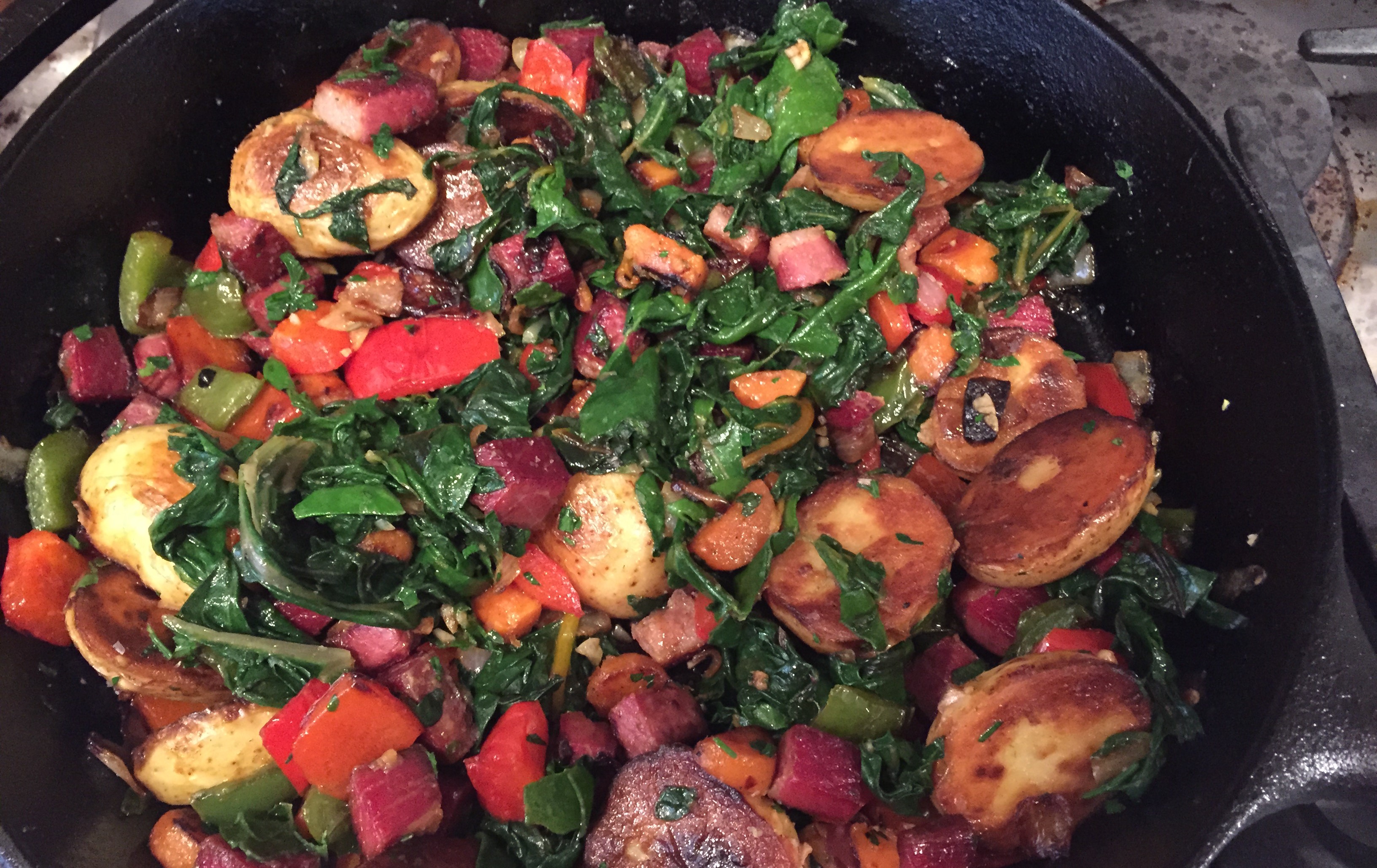
Use a heavy bottomed pan or cast iron pan to cook the hash.

Use a heavy bottomed pan or cast iron pan to cook the hash.

If you are like Tara and I, then you celebrated St. Patrick’s Day in some way.  For us, that meant homemade corned beef and cabbage last week.  If you ended up making or buying corned beef, you likely had at least a bit of corned beef left over.  I love left over corned beef as it makes great Reuben sandwiches as well as awesome hash.  Often we have breakfast for dinner and this is a dish we would definitely make for dinner.  However, it certainly could be used for brunch or a hearty breakfast.

Traditionally, corned beef hash consists of shredded corned beef with cubed or hash brown potatoes and some onion and served alongside a fried or poached egg.  This dish definitely has all of that, but I tend to take a kitchen sink approach to it in terms of adding additional vegetables.  I like to add greens, peppers, a mix of potatoes, and any other vegetable that I might have on hand that needs to be used.  By preserving the crispy potatoes and corned beef as a base, adding additional vegetables simple adds complexity, color, and more nutrition to the mix.  It also lightens it up.  Make no mistake, this is still a hearty dish.  However, it just is not quite so meat and potatoes focused.

In order to make the potatoes crispy, there are really a number of ways to go.  One, you can cube the potatoes and cut them very small, thus shortening the cooking time in the pan (so that the potatoes brown and crisp at the same time they cook through…otherwise you can end up with browned potatoes that are not cooked through or black potatoes that spent too long in the pan, so they burned).   Another way you can go is to shred or grate the potatoes and then wring out the excess water, which allows for improved browning.  I decided to go a different route and keep the potatoes in relatively larger pieces.  You can do that while at the same time avoid burning them by parboiling them.  That is, cooking them in boiling water for 10 minutes or so (depending on the size of the potatoes) until they are half cooked.  I then dunk them in ice water, which stops the cooking.  From there, you simply dry them off and cut them in larger sized pieces.  This allows the potatoes to finish cooking in the hash pan, browning them as they finish, without risking burning them (or at least reducing that risk).

If you don’t have corned beef or if you don’t care for it, you can certainly use sausage, bacon, ham, or any meat you’d prefer.  If you want to make this a vegetarian meal, skip the meat completely and stick with the vegetables or add cooked beans or lentils at the very end for additional protein, fiber, and flavor.  At any rate, you can’t go wrong with hash and you can certainly make it your own based on your personal tastes while using ingredients you have on hand.

In programming notes, a Reuben recipe using the leftover corned beef is coming tomorrow.  That will be the last of the corned beef for a while and I don’t know about you, but I am definitely glad (though it was good).  Also, later this week a veggie hash with fresh cranberry beans, a Croque Madame recipe, and not too far on the horizon, a double veal chop coupled with spring vegetables in a white veal stock and cognac sauce.  So, stay tuned!  The recipe and more pictures follow after the jump… Continue reading


1 Comment

Alton Brown’s Corned Beef Recipe

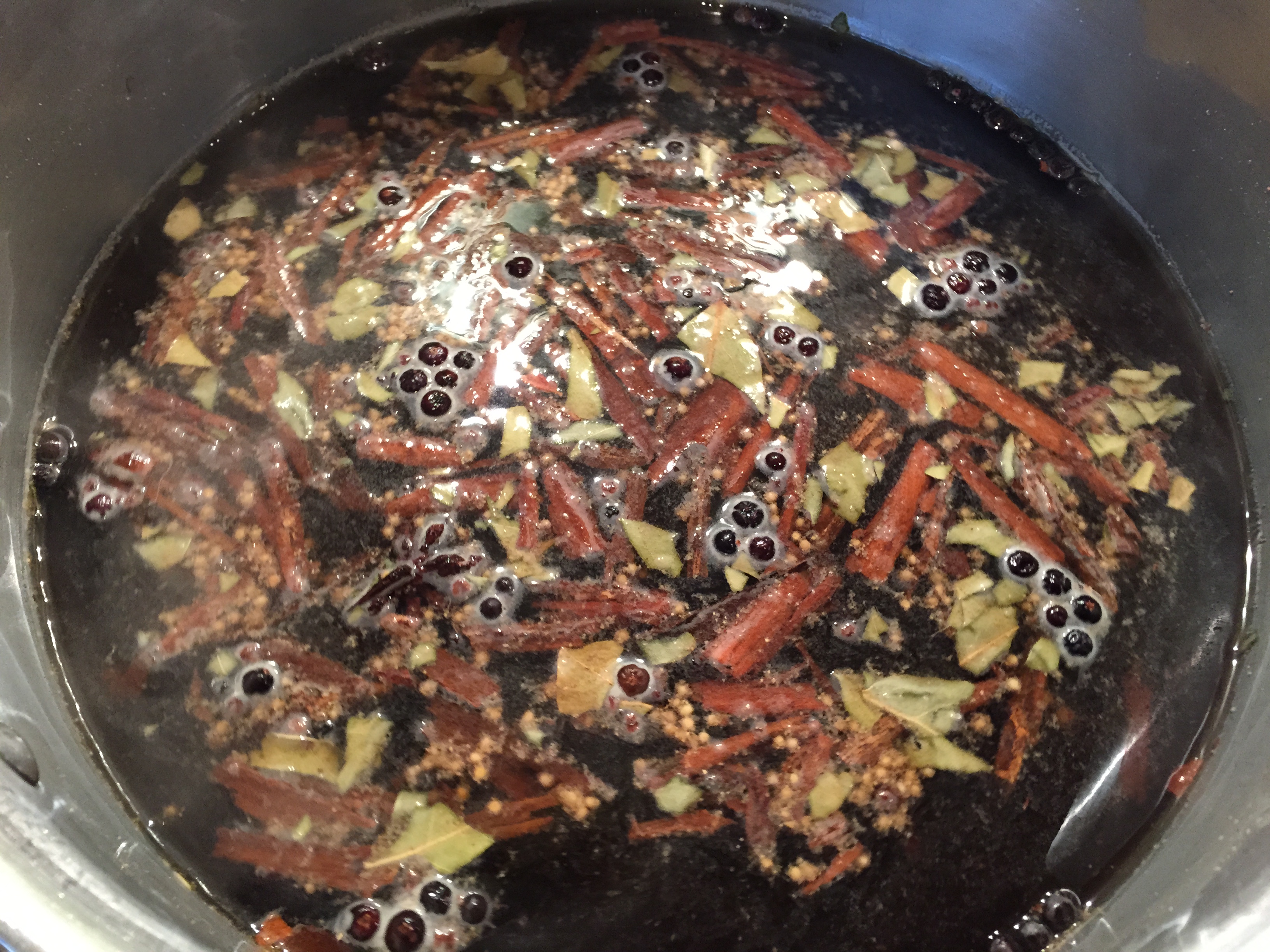
Combine all the spices with water and heat until all are dissolved and the liquid becomes less cloudy.  Pour over ice to cool and then pour the whole thing over the brisket, which is then refrigerated for 10 days.  Cook after that.

Combine all the spices with water and heat until all are dissolved and the liquid becomes less cloudy. Pour over ice to cool and then pour the whole thing over the brisket, which is then refrigerated for 10 days. Cook after that.

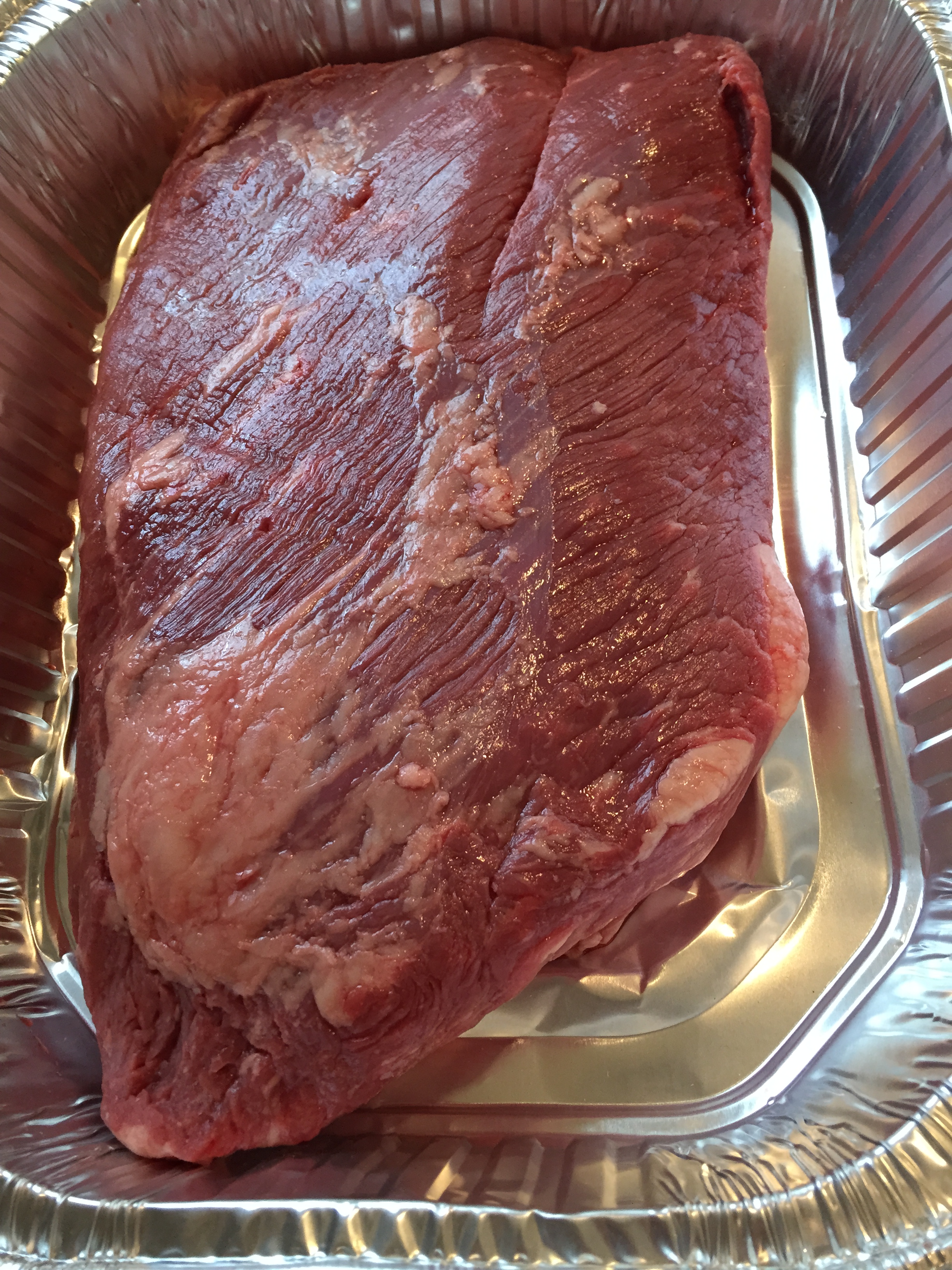
The brisket

The brisket

Last year for St. Patrick’s Day, I made my first corned beef and used this recipe from Alton Brown and the Food Network.  It worked extremely well and everyone, including me, was very happy with it.  I created a whole traditional meal, which I’ll talk more about in the coming days.  Last year, I only brined the beef for 8 days (instead of the prescribed 10), and it worked just great.  However, and I apologize for just posting this now, I decided to give it the full 10 days this year.  I followed the recipe exactly as directed.  All of the spices are pretty easily found, though I purchased both the juniper berries and the pink salt at William Sonoma at Short Hills Mall.  So, if you are so inclined and have time today, go get the ingredients and go for it!

St. Patrick’s Day is more fun with a big Irish meal and a Guinness!  If you don’t have time today or tomorrow but still want to do the recipe, you certainly can but give it at least 7 days or so.  As I said, last year, I did the same and it was really good.

Next up…roasted potato salad with shaved fennel bound with a homemade spiced mayonnaise with two types of mustard.  It’s really good and should be great for now and for Spring!  Being in the Jerz lately, I cannot wait for Spring…


Leave a comment

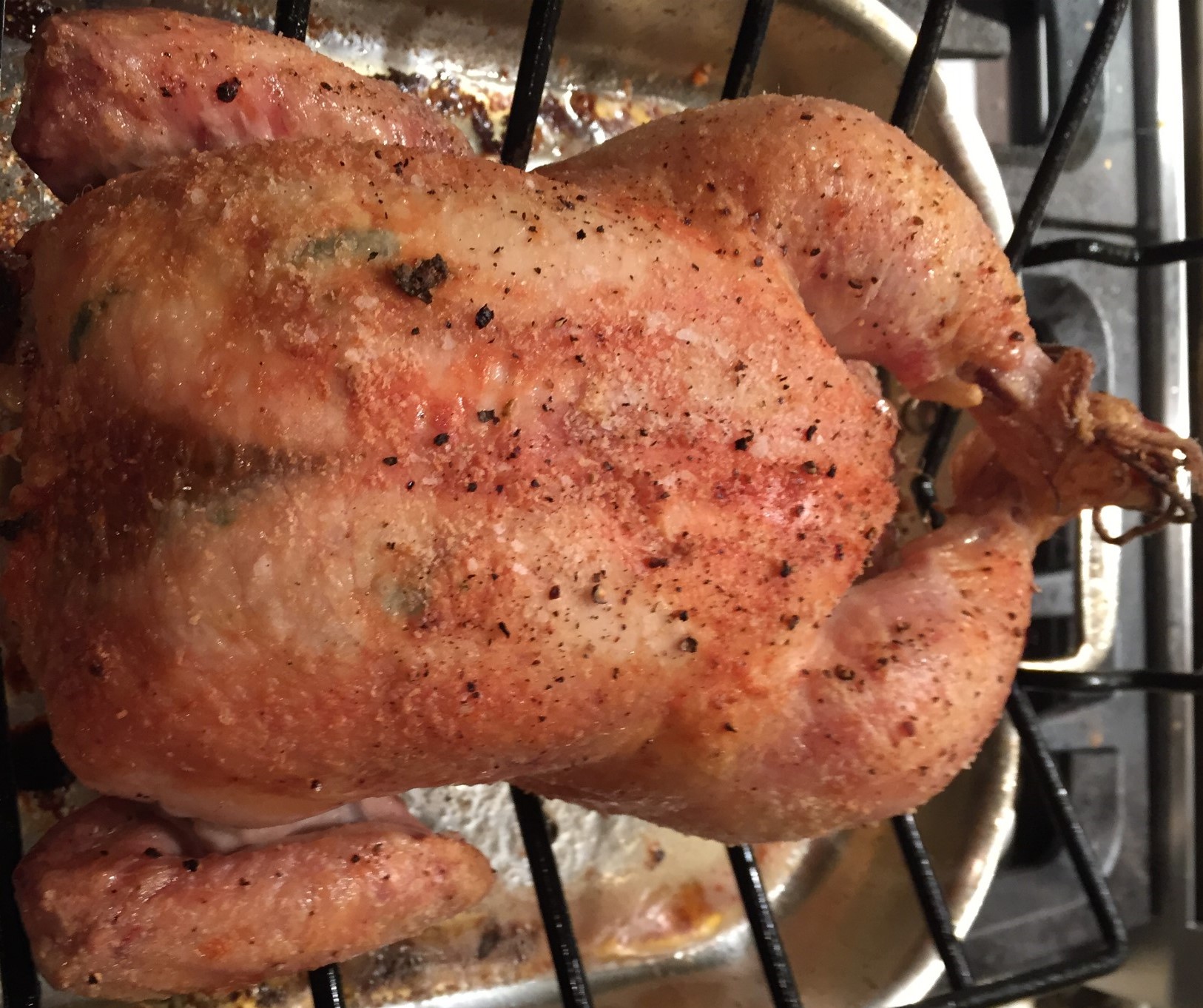
Roasted Chicken Rubbed with Roasted Garlic and Sage

Roasted chicken rubbed with roasted garlic and sage

Roasted chicken rubbed with roasted garlic and sage

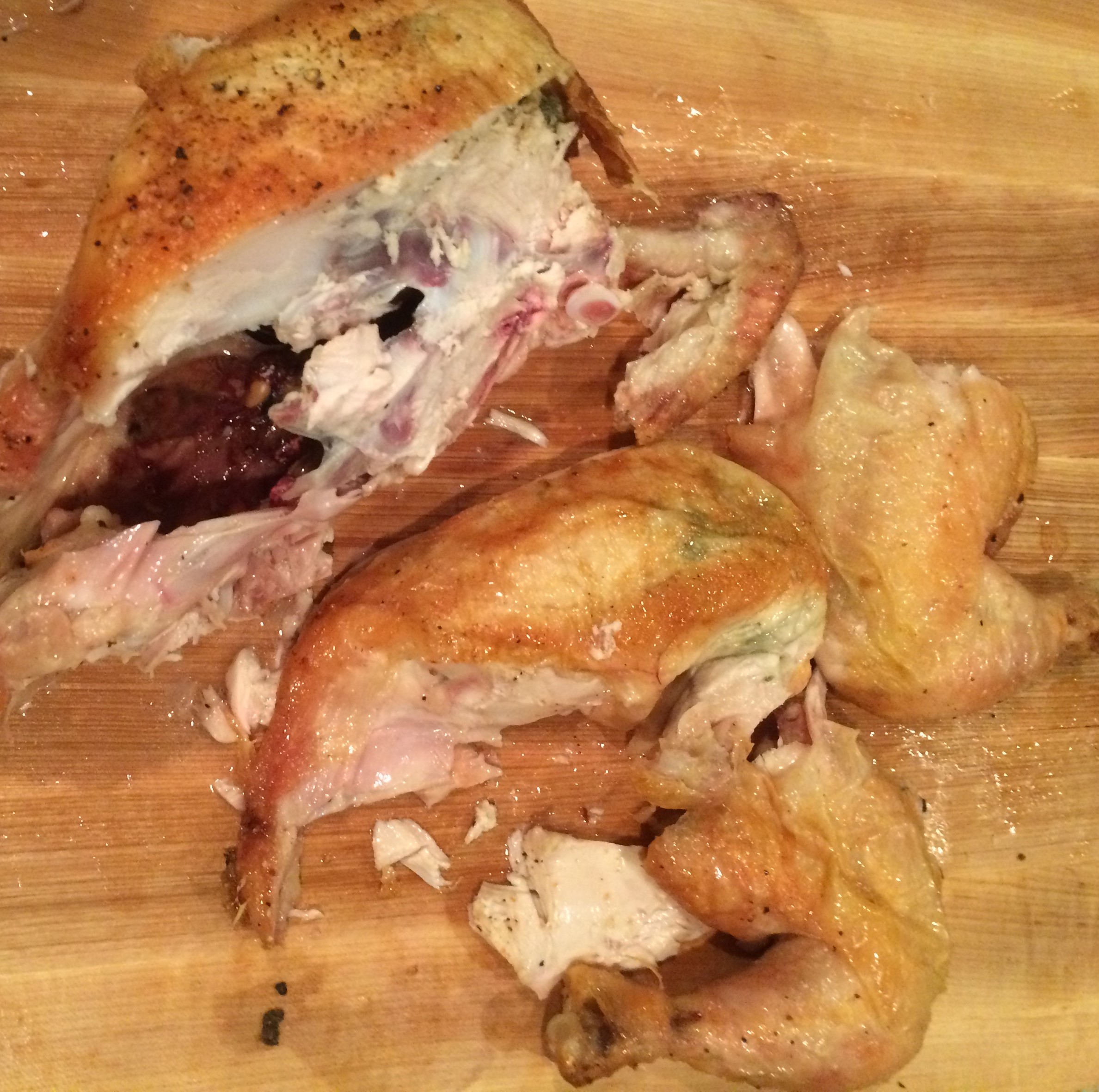
Carving a roasted chicken is easy.  Follow the joints of the chicken, carefully inserting your knife between the joints to separate the various parts.  Then remove the breasts.

Carving a roasted chicken is easy. Follow the joints of the chicken, carefully inserting your knife between the joints to separate the various parts. Then remove the breasts.

If I were to ask my wife which dish I make or have made that she likes best I guarantee it would either be roasted chicken or a ribeye steak.  That response usually drives me nuts because they are so basic and given all the other things I cook around here, I would think there would be other things she prefers.  However, despite the very basic nature of a simple roasted chicken, I love it too.  It’s really hard to beat a really well executed roasted chicken.  I define well executed being a roasted chicken that is nicely browned with crispy skin while remaining juicy, succulent, and tender.  That, my friends, is not so simple to pull off.  So, despite the basic nature of such a simple cooking method, it really is not that easy to perfect.  That said, it is possible to create an approximation to the ideal of a well executed roasted chicken with practice and doing some basic things to help it along.

In culinary school, we were given a five step method for preparing and roasting a chicken.  Some of those steps are designed to help with cooking the chicken properly and some of those things are designed to improve the overall appearance of the chicken once it’s carved.  Personally, I don’t think all five steps are necessary for home cooking purposes.  I really don’t follow all the steps but I do follow a couple.  I also add in a couple of steps that I feel make a big difference.  More thoughts and basic recipe follow after the jump… Continue reading


Leave a comment

Chestnut Flour Pasta with Mixed Mushrooms in Light Cream Sauce

ChestnutFlourPasta.4 (2)

Making fresh pasta can be a daunting task and one I have to admit I was a bit intimidated about tackling several years ago.  Luckily, though, it really isn’t very difficult and, like bread making, can be a very hand-on and rewarding experience.  Unfortunately, like bread making, there is also a bit of an art to making pasta and recipes for the dough can be a little off each time…a little too dry or too wet, etc.  Over time, you develop a sense for those sorts of variances and can adjust.  So, if you haven’t attempted making pasta before, it may take a few attempts for you to really get the hang of it.  Otherwise, it’s a very simple process usually involving a dough with just a couple of ingredients.

When my wife and I visited Italy recently, there were chestnuts everywhere.  Roasting on the street during festivals, the smell was pretty incredible.  Chestnut flour, though not commonly found or used here in the US, is pretty regularly used in Italy.  The chestnuts, dried and ground, flavor the pasta with a deep nutty and earthy flavor.  The moment you crack open the chestnut flour the smell envelops you. The darker flour it creates also colors the pasta in a unique way when compared to pastas made with semolina or white flours.

Chestnut pasta can be used in a variety of ways but classically it’s paired with mushrooms as the nutty earthiness of the pasta is enhanced by the earthiness of the mushrooms.  The light cream sauce helps cut through some of the overpowering earthiness to bring a nice balance of flavor.  Here, I used both dried (porcini) and fresh (crimini) mushrooms.  Feel free to use all fresh or all dried or a combination of both.  Also, fresh peas and other fresh vegetables are great to add to the mix.  However, given the unique flavor of the chestnut pasta itself, I think everyone owes it to themselves to make a simple dish at first with just a few flavors and ingredients so that you can really savor the flavor and texture of this pasta and allow it to stand on its own.  From there, go where your imagination takes you!  Recipe and notes follow after the jump… Continue reading


6 Comments

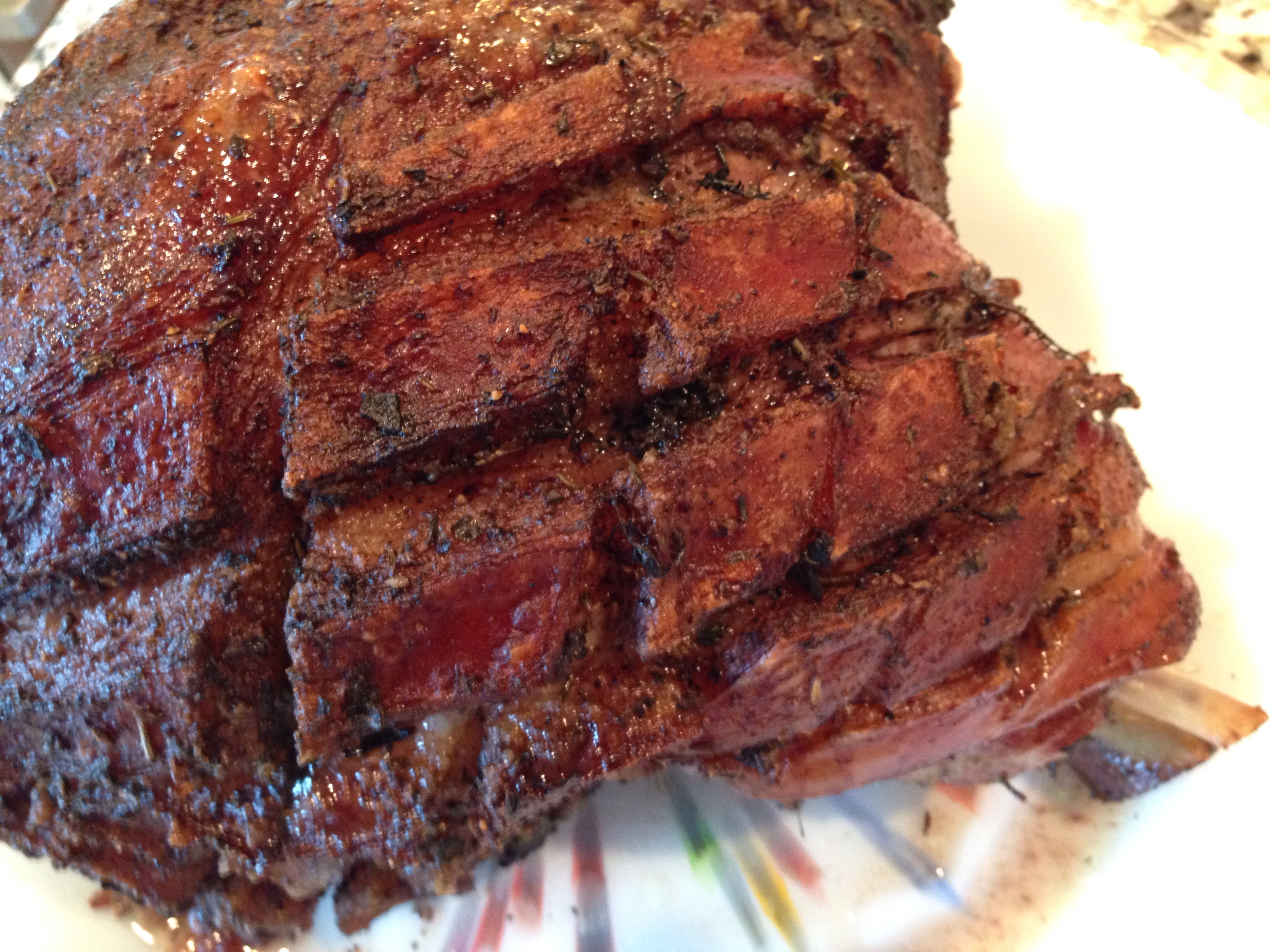
Easter Celebration Menu: Fresh ham with Provencal Herbs and basted in French wine

Image

Try this for your Easter celebration on Sunday.  It’s very easy, feeds a crowd, and is unbelievably good.  I used a red wine here but a good French wine will work just as well.  I plan to make a Swiss chard gratin, salad, bread, and some other sort of vegetable dish to be determined.  I haven’t sorted out dessert yet either but will post the full menu once I figure it out.  Until then, check this recipe out and give it a try!  PS- this is a recipe from last summer.  I’m reposting it because this is the dish we landed on for Easter this year…my Italian Easter Pie idea was nixed (boo!).

I don’t have a lot of experience with fresh ham. This is actually only the second time I’ve cooked one, though it’s such a massive piece of meat, you can adapt all sorts of recipes for leftovers after your initial meal. For me, there are a few advantages of cooking a fresh ham. First, and foremost, you get a lot of bang for your buck. It’s a great value and it’s sort of a showstopper for a dinner party because it doesn’t really look like a ham and if well roasted, it looks great and tastes really good too! In fact, if you have never had a fresh ham, it really tastes more like a pork loin roast than a typical ham. That difference in taste stems from the fact that it’s fresh or raw. In other words, most hams in grocery stores are usually cured for a number of days in a salt, sugar, spice and who knows what else mixture then slowly smoked. The fresh ham has not had anything done to it so the pork flavor takes center stage. Another really great thing about a fresh ham is that you can ask for the skin to remain on, thus giving you a crispy, browned outer crust. Underneath the crust you get a nice layer of fat that keeps the meat moist and succulent. Basted with French white or red wine, it takes on a nice natural sweetness and acidity as well.

The first time I made a fresh ham it was for a large dinner party for my wife’s co-workers and I made a 20 pound ham. It was huge, barely fitting in our oven. However it did and it worked out great. It easily fed the dinner party and we had lots of leftovers for sandwiches, etc. I actually made homemade Cuban sandwiches with some of the leftovers, complete with homemade Cuban loaves of bread and homemade yellow mustard. It was pretty great. Another little nerdy chef-y benefit to the fresh ham is that I get a fairly large leg bone (yep, the ham is a portion of the leg) that I can make stock out of. Last time I had one, I made a really great combination stock with the pork leg bone, the bones of one chicken, some beef bones with marrow still intact, and rounded out with a bunch of aromatic vegetables and herbs. I use this stock all the time…it made a ton and it’s super tasty. It imparts a great flavor to sauces, braises, stews, etc. Who knows what sort of stock I’m make with this leg bone, but I certainly will make some sort of stock with it!

This time, however, I chose to make a fresh ham as we are having a few relatives over for a number of days and wanted something that we could quickly pull out for dinner, have for lunch, or use for breakfast. I went with a 13 pound ham this time but will cook it in the same manner…rubbed with homemade dried herbs and sea salt, roasted slowly, and basting in a red French wine flavored with thyme, fresh bay leaves, and other aromatics. Luckily it won’t take four to five hours like the 20 pounder did!

I purchased both hams from Barth’s Meat Market in New Providence. They are definitely my go to butcher shop. I made pate the other day and needed ground pork liver…they procured it for me and ground in their grinder despite the fact that they definitely had to disassemble and clean every piece of the machine once it was finished. They did all of that for one customer and I only needed half a pound of the stuff. Talk about a business going above and beyond for a picky but very grateful customer! Anyhow, Barth’s makes their own regular, traditionally smoked hams that they have available all the time. As such, they usually have a fresh ham or two around because they prepare their smoked, cured hams from scratch. Luckily for anyone looking for a fresh ham, then, you don’t really need to even special order this special occasion cut of meat.

As for serving the dish, I plan to put it out on a platter and have it handy anytime for any meal. It’s so versatile that it really could be served for breakfast, lunch, or dinner. I will probably make a croque madame with it at some point. Can’t beat that! However, I made a homemade tartar sauce that goes great with it. Tartar sauce obviously goes wonderfully with fish but isn’t a ‘fish’ sauce alone. It’s a flavored mayonnaise seasoned with parsley, pickles, shallots, garlic, lemon juice, capers, and Dijon mustard (all of which go great with ham). Anyway, a bit of ham and some tartar sauce coupled with some summer vegetables or a salad will work great!

The recipe for the ham follows after the jump but keep in mind, you can spice it anyway you’d like and you can certainly cure it or brine it yourself prior to roasting it. I haven’t done either of those things yet…perhaps one day. For now, I’m going to enjoy a great slow roasted piece of pork seasoned with traditional French herbs and wine. Hope you try a fresh ham and enjoy it as much as Tara and I have.

Note: I used red French wine this time around. The first time I made a fresh ham, I basted it in a French white. After having now tried both, I definitely prefer the look and taste of the white wine baste. The red tastes just fine and certainly gave the ham a deep red brown hue, which I think looks great. The taste of the red wine is more forward, giving it a sticky, almost jam like feature to the outside crust. So all in all, not so bad. However, if I had to choose again in future, I would definitely go with white wine.

Recipe follows after the jump! Continue reading