culinary flights of fancy

Home Cooking Adventures in Berkeley Heights


Leave a comment

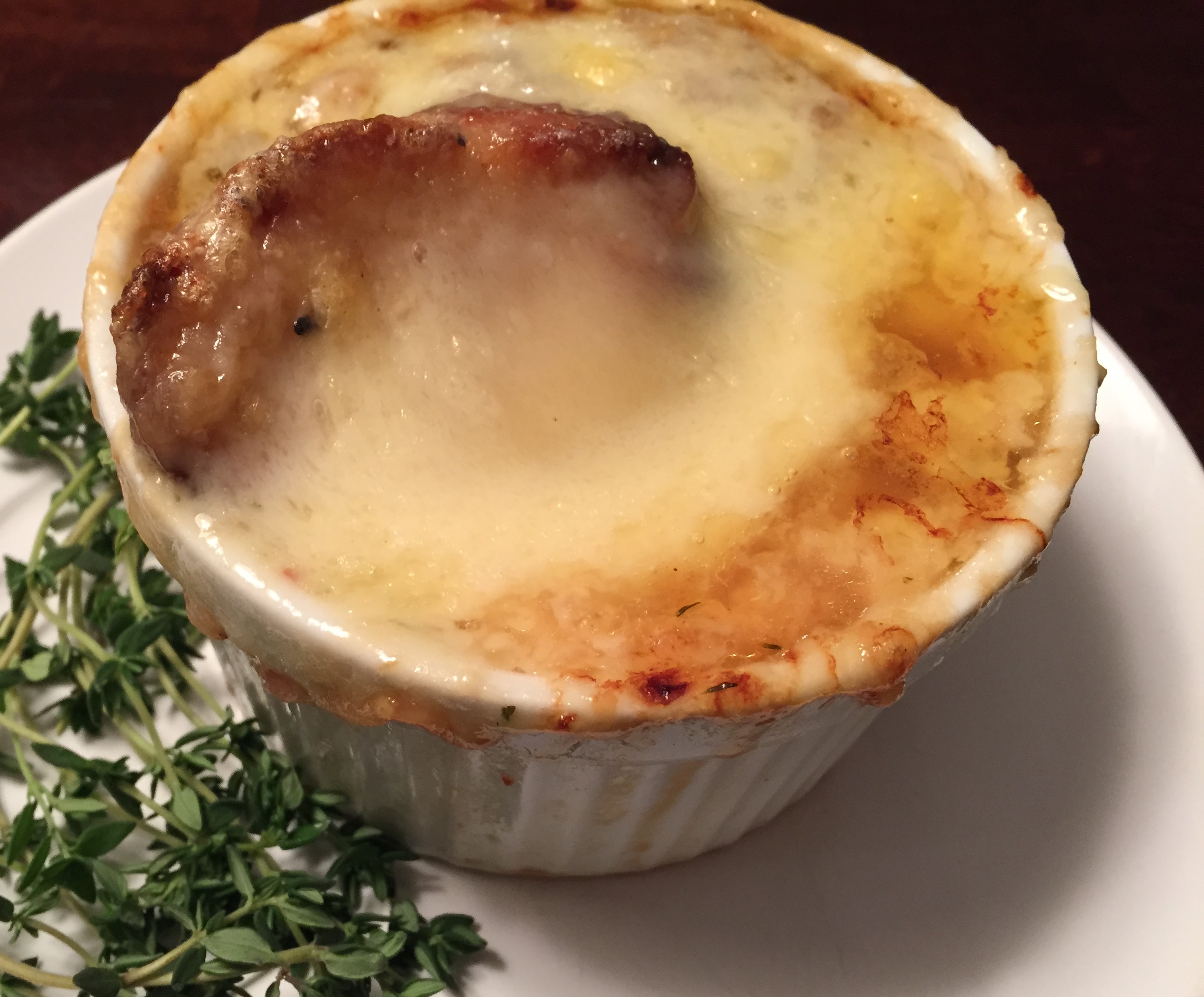
Classic French Onion Soup

Classic French Onion Soup

Classic French Onion Soup

I made homemade baguettes.  You can find a good quality baguette at Biagio's or Kings (they sell an organic version that is pretty good).

I made homemade baguettes. You can find a good quality baguette at Biagio’s or Kings (they sell an organic version that is pretty good).

There are a couple of keys things to consider when making French onion soup.  One, using a combination of beef and veal stock adds a depth of flavor that’s tough to beat.  Two, the onions need to caramelized for quite a long time to really develop the flavor of the onions and to provide an even deeper flavor to the stock.  With such a simple soup, it becomes really important to develop the flavors of the few individual components.  Traditionally, the soup is accented with some fresh thyme and usually a splash of either Cognac, red wine, or dry sherry to finish.  Personally, I’ve tried it with all of those and though they do add a punch of background flavor at the end, I really feel that it’s not all that necessary.  However, if you try the finished soup and feel it needs a little extra something, certainly feel free to throw in a bit of one of those.

Note:  This soup is better when prepared a day or two ahead of time, giving the combined flavors a chance to meld together prior to final serving.

I apologize for this taking so long as I promised this recipe a while ago but once again time got away from me as I juggled not feeling super well with leaving for a few days to meet Tara in Phoenix.  In the middle of that, I tried a basic Asian pork belly recipe and thought that would be ready to roll but it turns out that it’s not really ready for prime time so I will have to play with that particular dish a bit more and post the resulting recipe once I arrive at one I think is both doable and delicious.  So, stay tuned for that at some point soon!  Recipe and more photos follow after the jump… Continue reading

2 Comments

Pizza Night Part Two: Crust Reconsidered

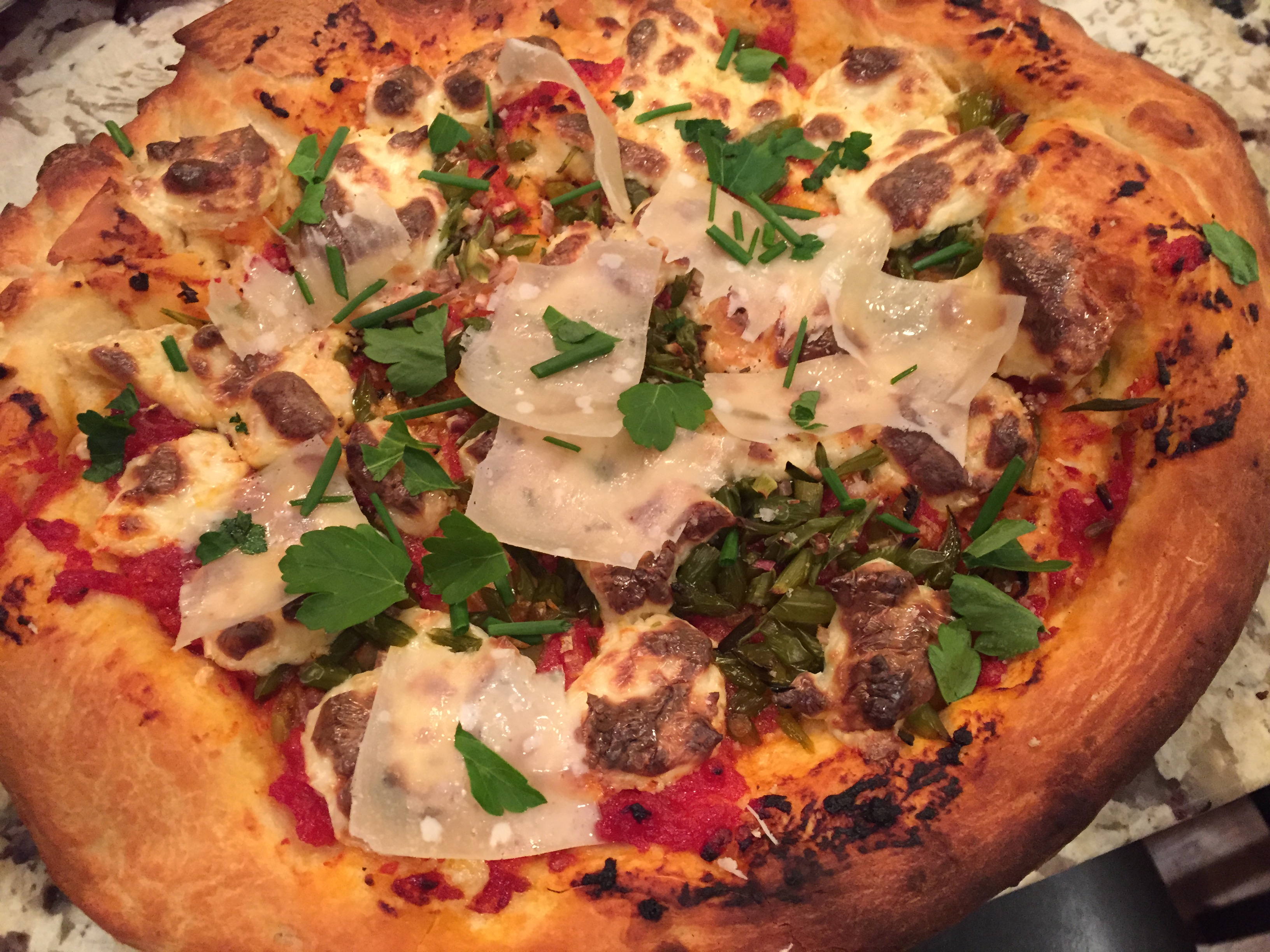
Garlic scape pizza with shallot, tomato sauce and homemade mozzarella

Garlic scape pizza with shallot, tomato sauce and homemade mozzarella

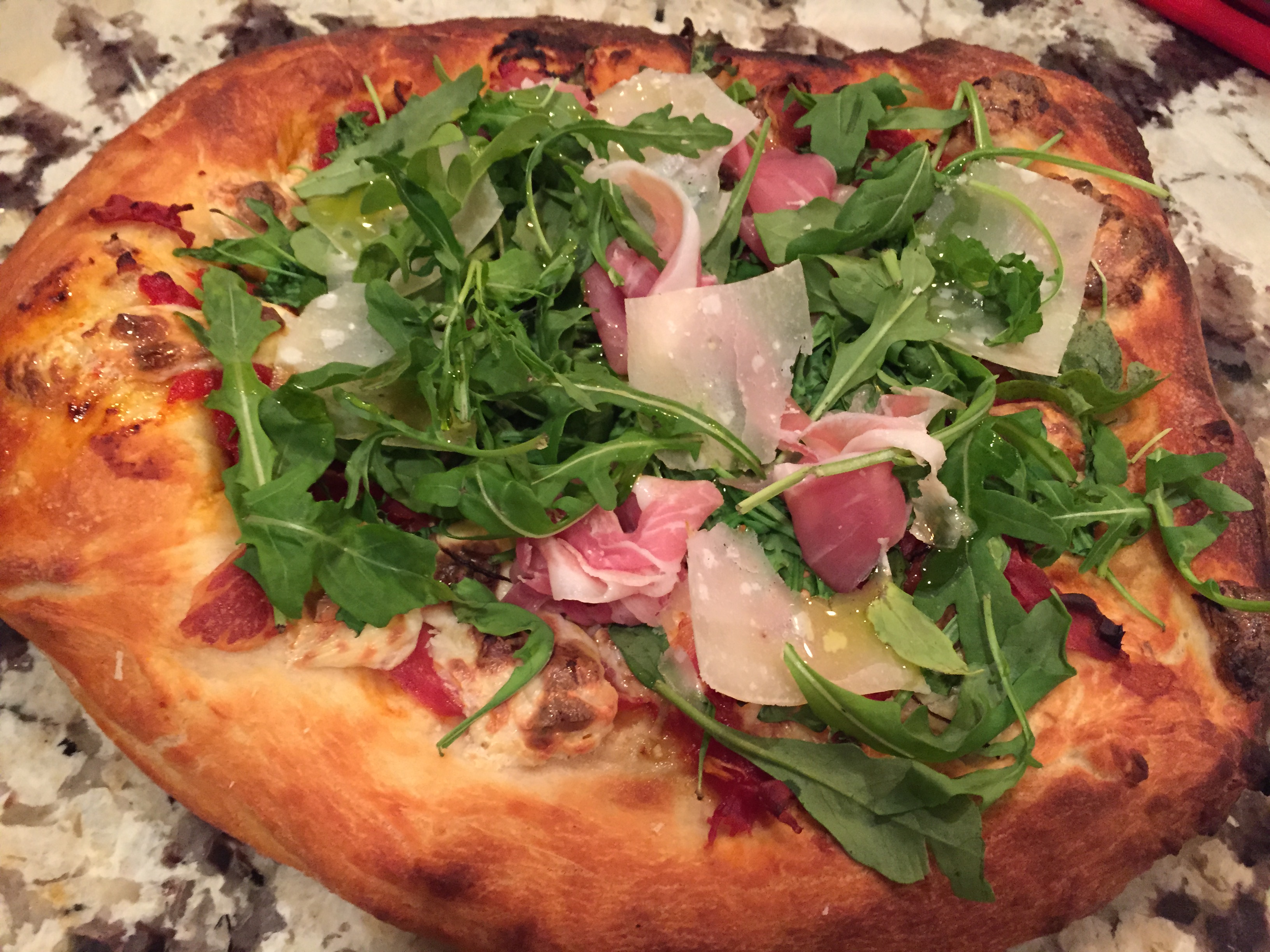
Prosciutto and Arugula Pizza with Homemade Mozzarella and Parmesan Reggiano

Prosciutto and Arugula Pizza with Homemade Mozzarella and Parmesan Reggiano

A few months ago I posted a ‘family pizza night’ recipe/menu and while I think the toppings are still solid, I wasn’t super excited about the crust.  It worked and it’s tasty though I think it lacked that crispiness that good quality ‘pizzeria’ pizza possesses.  So, I’ve experimented, read, and chatted with some pizza makers including one in Italy that made a pretty spectacular pizza in Florence.  So, I’m going to post my new favorite pizza dough recipe.

You can still use the ingredients from my previous post.  Also, the pictures are from Super Bowl Sunday and have different toppings as an option.  The great thing about pizza, however, is that really creates a blank canvas for you and your family to use your imagination and create something all your own.  As I mentioned in the first post, pizza night is a great opportunity to get kids involved in making dinner.

So the good news is that this dough is pretty easy to make and doesn’t take a lot of effort at all.  However, the bad news is that, unlike the earlier pizza dough recipe I posted, this recipe takes 36 hours or more to make…yikes, I know.  But it’s worth it.  It takes no time at all to put together and you only work the dough for a couple minutes.  From there, you just slip the dough into a bowl and cover it with plastic wrap before placing it in the refrigerator for the 36 hours or so to rise slowly.  This develops the flavor of the crust and helps provide that crunchiness that my other recipe lacked.

Beyond the rise time, I tweaked the type of flours I used from a simple unbleached AP to a combination of unbleached AP and 00 flour.  00 flour is finely ground and comes from soft wheat’.  Most flours like AP or Bread flour comes from ‘hard wheat’ varietals.  There are a number of different types of hard and soft wheat and certainly feel free to experiment around with the various wheat types and whole grains.  00 Flour is commonly found in Italy but, while available in the US, it is certainly less common.  You can purchase 00 flour at specialty and gourmet grocery stores.  I can tell you that stop ‘n shop locally in Berkeley Heights does not carry it.  However, Kings does and it runs around 4-5 per bag and the bags are typically smaller than the large bags of AP flour that are offered.  So, it’s certainly more expensive.  The investment in making a special meal is definitely worth it in this case as it makes a world of difference.

One last note:  I know if you scroll through the site of late, it has been very heavily skewing towards Italian food.  I plan to rectify that pretty quickly with some things I’m working on right now.  So, if you don’t care for Italian food (who are you??), don’t worry…changes are coming.  If you love Italian, don’t worry.  I’m not abandoning Italian food altogether.  I just want it to be a part of what’s offered and discussed.  Anyway, stay tuned for new directions.  Until then, have a pizza night with family or friends and show off your ability to create quality crusts…it will definitely impress!

PS- this recipe can be used for flatbreads as well.  Recipe follows after the jump… Continue reading


Leave a comment

Chestnut Flour Pasta with Mixed Mushrooms in Light Cream Sauce

ChestnutFlourPasta.4 (2)

Making fresh pasta can be a daunting task and one I have to admit I was a bit intimidated about tackling several years ago.  Luckily, though, it really isn’t very difficult and, like bread making, can be a very hand-on and rewarding experience.  Unfortunately, like bread making, there is also a bit of an art to making pasta and recipes for the dough can be a little off each time…a little too dry or too wet, etc.  Over time, you develop a sense for those sorts of variances and can adjust.  So, if you haven’t attempted making pasta before, it may take a few attempts for you to really get the hang of it.  Otherwise, it’s a very simple process usually involving a dough with just a couple of ingredients.

When my wife and I visited Italy recently, there were chestnuts everywhere.  Roasting on the street during festivals, the smell was pretty incredible.  Chestnut flour, though not commonly found or used here in the US, is pretty regularly used in Italy.  The chestnuts, dried and ground, flavor the pasta with a deep nutty and earthy flavor.  The moment you crack open the chestnut flour the smell envelops you. The darker flour it creates also colors the pasta in a unique way when compared to pastas made with semolina or white flours.

Chestnut pasta can be used in a variety of ways but classically it’s paired with mushrooms as the nutty earthiness of the pasta is enhanced by the earthiness of the mushrooms.  The light cream sauce helps cut through some of the overpowering earthiness to bring a nice balance of flavor.  Here, I used both dried (porcini) and fresh (crimini) mushrooms.  Feel free to use all fresh or all dried or a combination of both.  Also, fresh peas and other fresh vegetables are great to add to the mix.  However, given the unique flavor of the chestnut pasta itself, I think everyone owes it to themselves to make a simple dish at first with just a few flavors and ingredients so that you can really savor the flavor and texture of this pasta and allow it to stand on its own.  From there, go where your imagination takes you!  Recipe and notes follow after the jump… Continue reading